Hosepipe Ban Tree Watering Bags Uk
Direct answer: a UK hosepipe ban, formally a Temporary Use Ban, does not automatically mean a young tree must be left unwatered. It usually restricts hosepipe use. You still need to check your own water company notice, then use a watering can, bucket, rainwater butt or permitted exemption route to get water into the root zone without assuming one UK-wide rule.
This matters because newly planted trees can fail quickly in hot, dry weather. The practical job is not to find a loophole; it is to keep the tree alive while respecting the current notice for your supply area.
Start With Your Water Company, Not A National Rule
The Tree Council guidance on watering newly planted trees during a hosepipe ban explains that restrictions and exemptions can vary by company. A useful public example is the Thames Water Temporary Use Ban legal notice, which shows how detailed the wording can be for recently planted trees and situations where hand watering or non-potable water is not feasible.
That is why the first step is administrative, not horticultural: identify the water company for the site, read the current notice, and look specifically for wording on newly planted trees, standard trees, saplings, whips, public planting, non-potable water and hand watering.
Ban-Aware Filling Routes
- Watering can from an indoor or outdoor tap: often still usable where the restriction is on hosepipes, but confirm the notice.
- Bucket or can from a rainwater butt: usually the simplest low-risk route if stored rainwater is available.
- Suitable greywater: for ornamental trees, light household greywater may be an option; avoid anything greasy, salty, disinfectant-heavy or unsuitable for the planting context.
- Hosepipe under a listed exemption: only use this when the current supplier notice clearly allows it for that tree and situation.
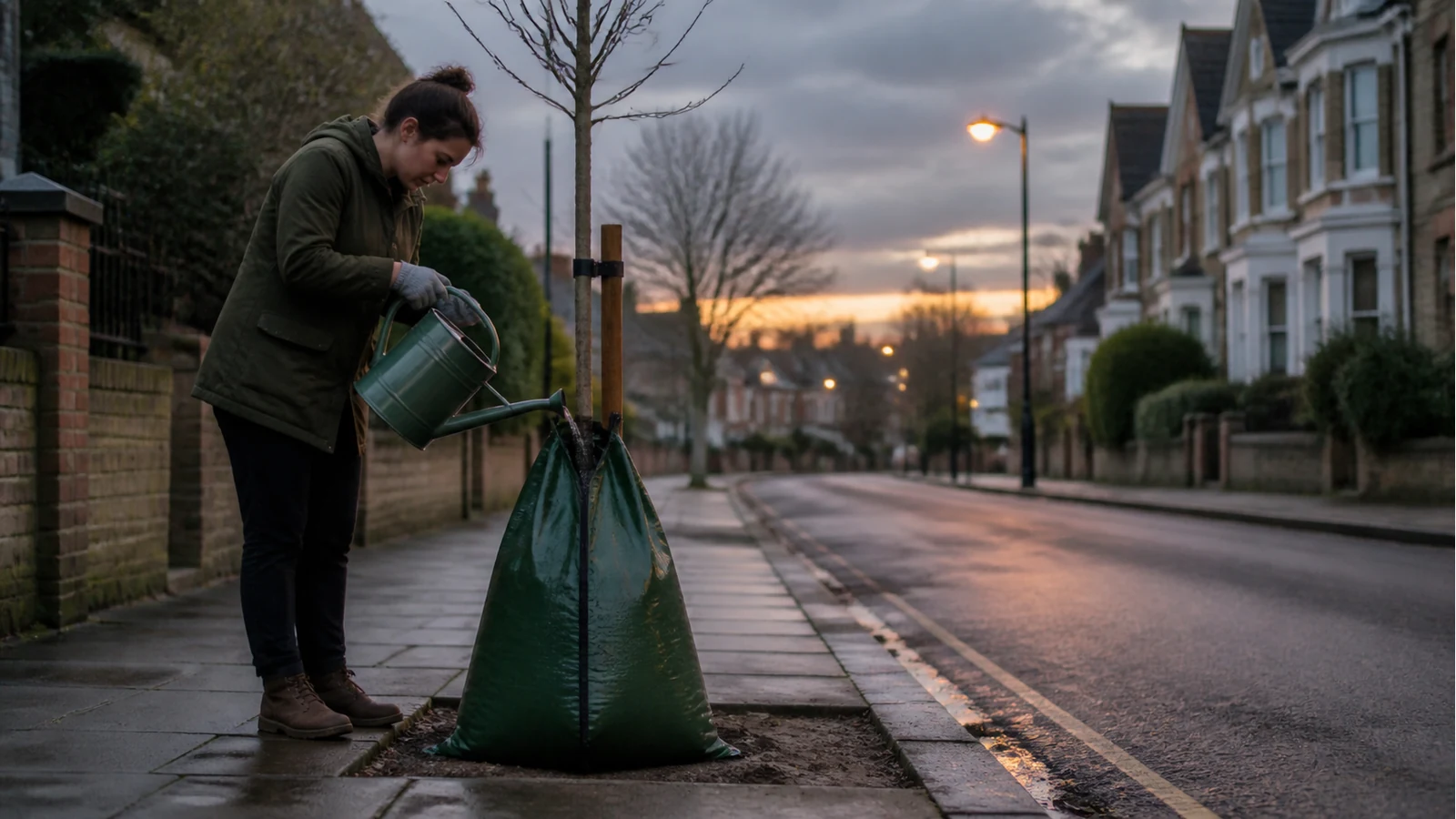
Trees for Streets' hosepipe ban watering advice is useful because it translates the problem into practical volunteer actions: use cans, use greywater carefully, and fill a watering bag through its top opening when a bag is already installed.
Using A Tree Watering Bag Without Turning It Into A Ban Workaround
A watering bag is a dosing tool. It can help release water slowly around a young trunk, but it does not make the water source legal by itself. If the current rule says no hosepipe for your use case, fill the bag by can, bucket or rainwater source instead.
For a 20-gallon bag, plan the labour before you start. A full bag is heavy, so put the empty bag in the right place first, add water gradually, and do not drag it once full. If you are coordinating a community or street-tree route, record the fill method beside each tree so the next person does not assume a hose exemption exists.
When To Pause
Pause before filling if you cannot identify the water company notice, if the tree is not newly planted and the exemption wording only covers recent planting, or if the site owner has separate rules for parks, schools, housing land or highways. In those cases, use harvested rainwater or get written confirmation before relying on a hose.
FAQ
Can I fill a tree watering bag with a can during a ban?
Often yes where the ban is specifically on hosepipes, but confirm your water company notice. The safe habit is to read the current notice and use cans, buckets or stored rainwater when there is any doubt.
Do street trees have different rules?
They can. Some notices and drought guidance discuss young or standard trees differently from general garden watering. Check the public notice and the landowner's instructions before organising volunteers.
Sources
For current rule interpretation, use your water company's live notice first, then compare it with public tree-care guidance from the Tree Council and Trees for Streets.