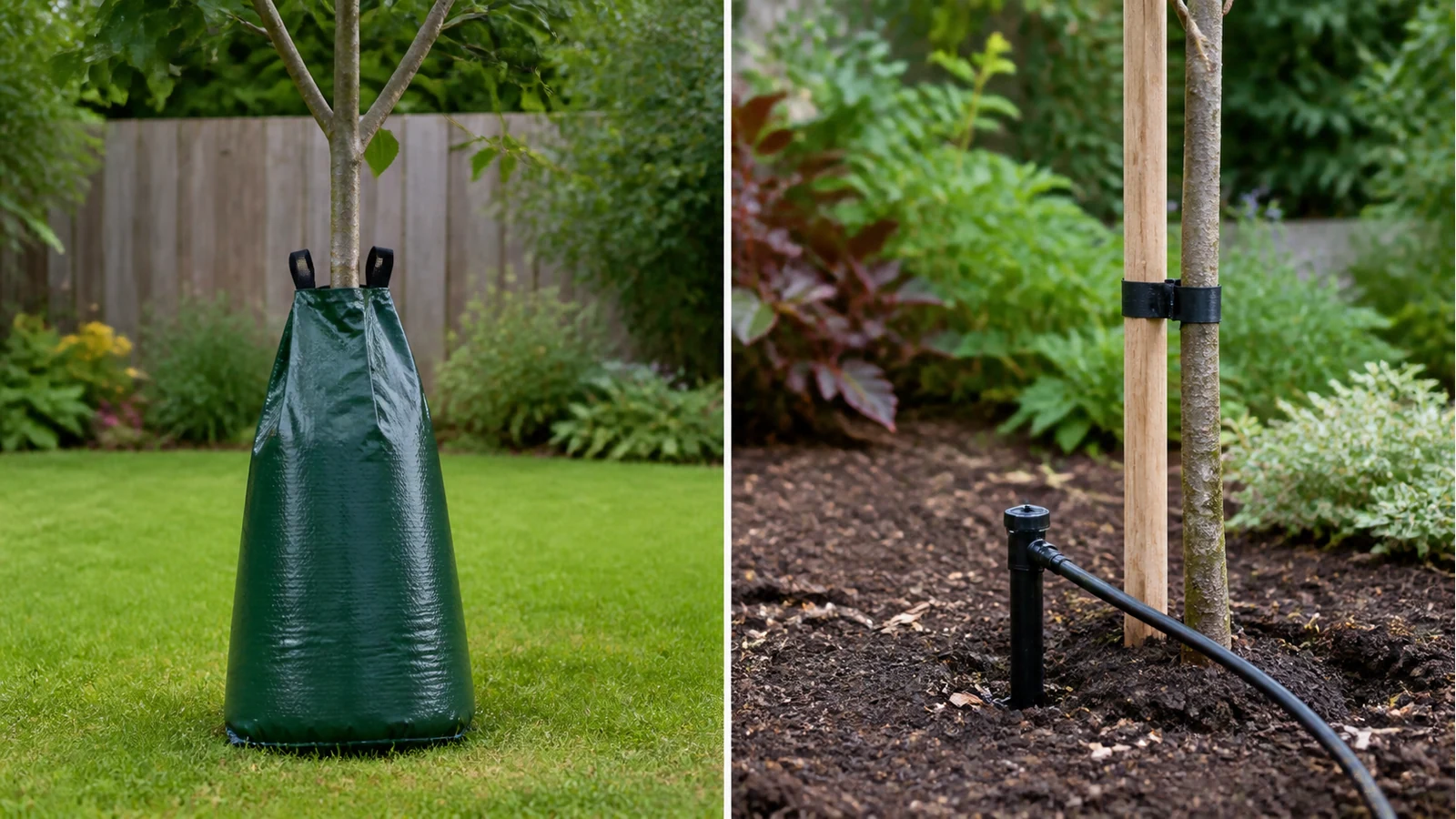
Tree Watering Bag Vs Irrigation Tube Uk
Direct answer: choose a tree watering bag when the tree is already planted and you need a visible, removable slow-release method. Choose a buried irrigation tube when the watering method is being designed into the pit at planting time and a discreet rootball inlet is part of the specification.
The real distinction is timing. A bag is a post-planting retrofit. A tube is normally part of the planting build-up. Confusing those two leads to awkward installs and disappointed buyers.
Decision Table
| Question | Watering bag | Buried irrigation tube |
|---|---|---|
| Tree already planted? | Usually the easier retrofit if trunk size and site access fit. | Harder to add properly after the rootball is in place. |
| New scheme still being specified? | Useful where removable seasonal watering is acceptable. | Often better where a discreet built-in inlet is wanted. |
| Need visual checks? | Easy to see whether a bag is installed, filled or empty. | Less visually intrusive, but less obvious to casual volunteers. |
| Winter removal? | Remove, clean and store outside the watering season. | Normally remains as part of the tree pit installation. |
| Paved or public-realm pit? | Can reduce surface dumping, but the bag still needs space around the trunk. | Can be planned neatly into the pit when designed early. |
What UK Planting Guidance Says
The RHS guidance on planting trees and shrubs lists watering aids such as irrigation tubes and watering bags, and also warns that soil can look moist at the surface while remaining dry around the roots. That supports the practical aim: get water to the establishment zone rather than letting it puddle and run away.
A UK nursery comparison, King and Co's guide to whether tree watering bags are worth using, describes the familiar split: zip-on bags for slow release around an existing young trunk, and Rootrain-style perforated pipes installed with the tree. For trade specification, the Green-tech Mona Relief tree irrigation product page shows how a buried rootball irrigation system is positioned as a discreet establishment method.
When A Bag Is The Wrong Tool
Do not force a trunk-wrap bag onto a tree that is too large, heavily flared, sharply leaning or boxed in by guards and hard landscaping. If the pit is still being designed for a large scheme, a buried system may give cleaner long-term integration. If the soil drains badly, no product should be treated as permission to keep adding water without checking rootball moisture.
When A Bag Fits
A bag fits best when the tree is already in the ground, the trunk diameter is within the product's stated range, someone can refill it on a route, and visible seasonal equipment is acceptable. For a post-plant retrofit on young trunks, a slow-release bag can turn a quick runoff-prone pour into a slower dose.
If that is your situation and you need a same-site product route, the 20-gallon slow-release watering bag 12-pack is relevant only after you have confirmed trunk fit, refill access and that a removable bag suits the site.
Next Step
Do not start with brand names. Start with the installation moment: already planted means evaluate bag fit; not yet planted means ask the landscaper whether a buried tube should be specified before the rootball goes in.